Biblical Insights
Birth Narrative Audience Insight
A Sacred Scripture Insights Series Resource
Discover in this 10-page Insight the story behind the story. This Insight guides readers through the Birth Narratives in Matthew and Luke — two accounts we often merge without realizing how different they truly are. By uncovering each author’s purpose, audience, and theological emphasis, this resource helps students, adults, and faith groups understand the birth of Jesus the way the Gospel writers intended.
You are guaranteed 60 minutes of meaningful, guided conversation that keeps teens and adults fully engaged from start to finish. This Insight delivers a clear, accessible, and eye‑opening understanding of what each evangelist wrote and who they wrote it for, giving participants a deeper grasp of Scripture than they’ve ever had before.
Every session sparks discussion, builds confidence, and leaves your group saying, “I never knew that — but now it finally makes sense.”
Who This Insight Is For
Catholic high school Scripture courses
Adult faith formation groups
Bible study circles
Parish catechesis programs
Anyone seeking a deeper understanding of Scripture

What This Insight Covers
1. Why Audience Matters in Scripture
Most readers never consider who the Gospel writers were writing for — yet audience shapes everything. This Insight walks participants through how Matthew and Luke craft their narratives to communicate specific truths about Jesus.
“Each writer is communicating something specific.”
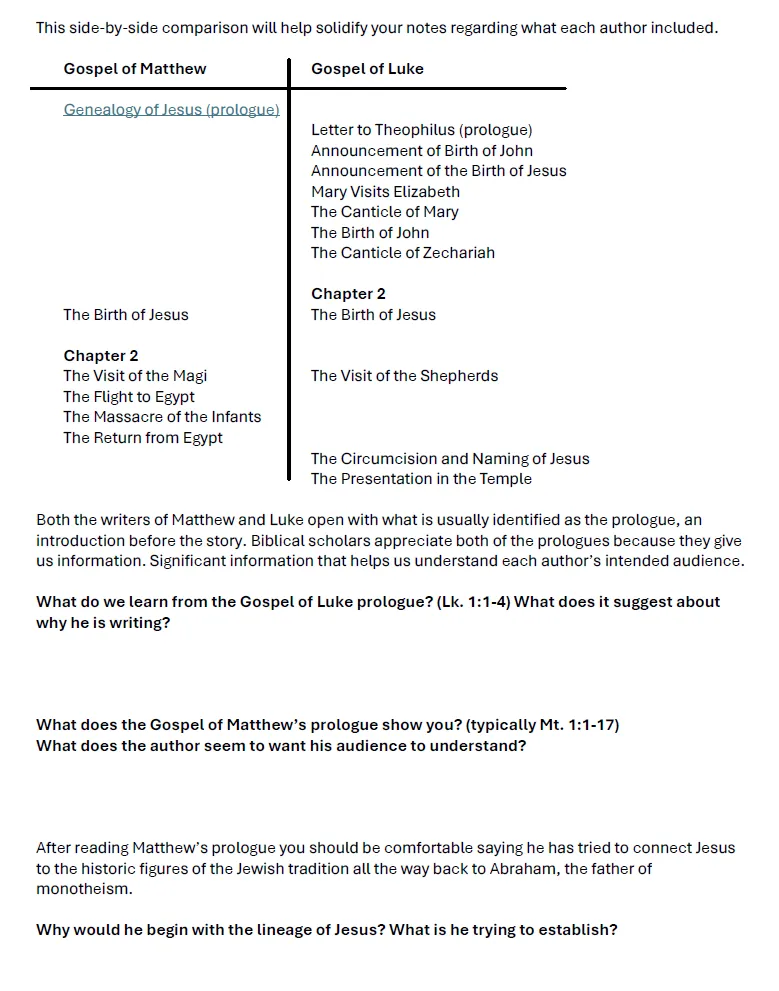
2. Side‑by‑Side Comparison of Matthew & Luke
A clear chart highlights what each author includes — genealogy, annunciations, birth details, visitors, and cultural context — helping readers see the differences instantly.
“This side-by-side comparison will help solidify your notes regarding what each author included.”
3. Matthew’s Purpose: Jesus the Fulfillment of Jewish History
Matthew connects Jesus to Abraham, Jacob, David, and the kings of Israel, establishing Him as the long‑awaited fulfillment of Jewish tradition.
“He has tried to connect Jesus to the historic figures of the Jewish tradition all the way back to Abraham.”
4. Luke’s Purpose: Jesus for All People
Luke writes for Theophilus and the Gentile world, emphasizing Mary’s experience, humility, and accessibility. Shepherds — not royalty — greet the newborn Christ.
“Luke’s Gospel tells Gentiles: Jesus is your Messiah too.”
5. Cultural, Historical, and Scriptural Context
Participants explore:
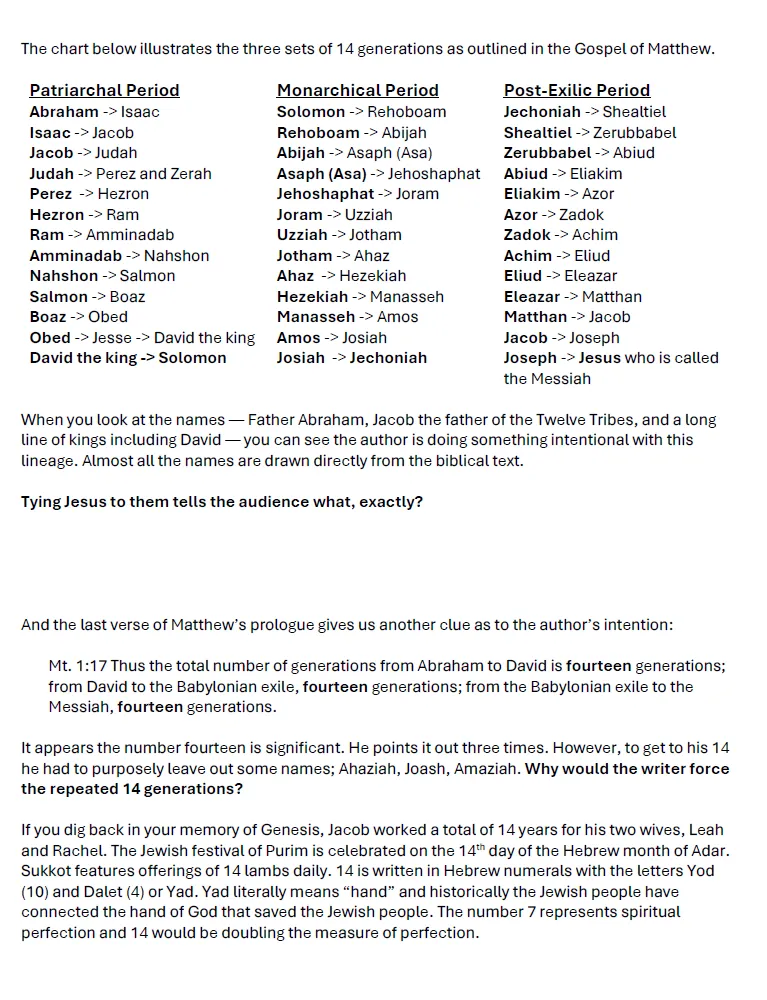
The significance of genealogies
The meaning behind Matthew’s repeated “14 generations”
Roman census practices
The political climate under Herod the Great
Luke’s unique emphasis on women in the Gospel narrative
6. Guiding Questions for Reflection or Group Discussion
Each section includes prompts that help readers think deeply, share insights, and connect Scripture to real life.